

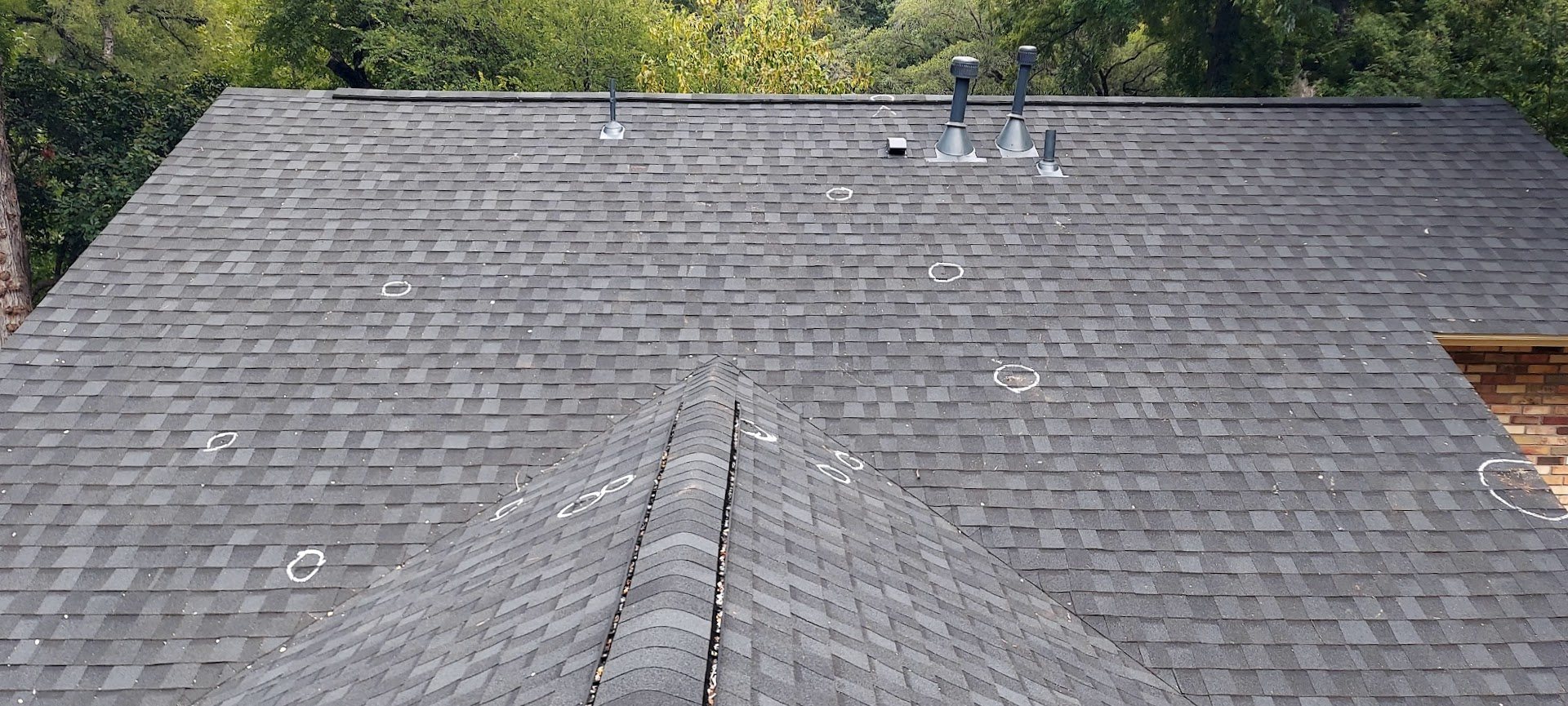
How can I tell if hail damaged my roof without climbing on it?
Look for dents in your gutters, downspouts, vents and window screens, and check for shingle granules collecting at the bottom of your downspouts. These are common signs that hail may have damaged the roof. If you see them, schedule a roof inspection, and please stay off the roof.
What to look for
Start at the downspouts. A buildup of shingle granules where the water comes out can mean hail knocked granules loose from the shingles.
Next, check the gutters and downspouts for dents, especially on the side of the house that faced the storm. Then look at roof vents, window screens, air conditioning units and other metal surfaces around the house. Thin metal dents easily, so it is a good sign of how hard the hail hit.
How hail damages shingles
Hail damage to asphalt shingles can include granule loss, material loss along the edge of a shingle and shingles that have been punctured. Newer shingles hold up better to hail than older shingles, because asphalt becomes more brittle with age.
Most hail damage is cosmetic and will not affect the life of the roof. Severe granule loss, cracked shingles or shingles that have been punctured may need to be replaced. A roof inspection is the best way to know which kind of damage you have.
When to call
If you find dents or a buildup of granules, schedule a roof inspection soon after the storm. Insurance policies have deadlines for filing a claim, and damage that is left alone can get worse.
Please do not climb onto your roof. A High Pointe representative will inspect your roof and property at no cost to you.
Related Questions
Does hail damage always cause a leak?
No. Hail damage does not always cause a leak right away, which is why it is a good idea to have your roof inspected after a storm.
Should I file a claim before the inspection?
We recommend having the roof inspected first, so you know what was damaged before the adjuster visits.
